Lake Kariba and Kafue
Africa's largest artificial lake and Zambia's largest national park united in a still-remote region, between houseboats on the Zambezi and the Busanga plains.
Central-western Zambia brings together two very different landscapes that we often combine into a single itinerary: Lake Kariba to the south, a giant reservoir on the Zambezi, and Kafue National Park to the west, an immense stretch of bush still seldom visited. Between them, roughly 400 kilometres of mixed roads, or a charter flight from Lusaka that transforms the logistics.
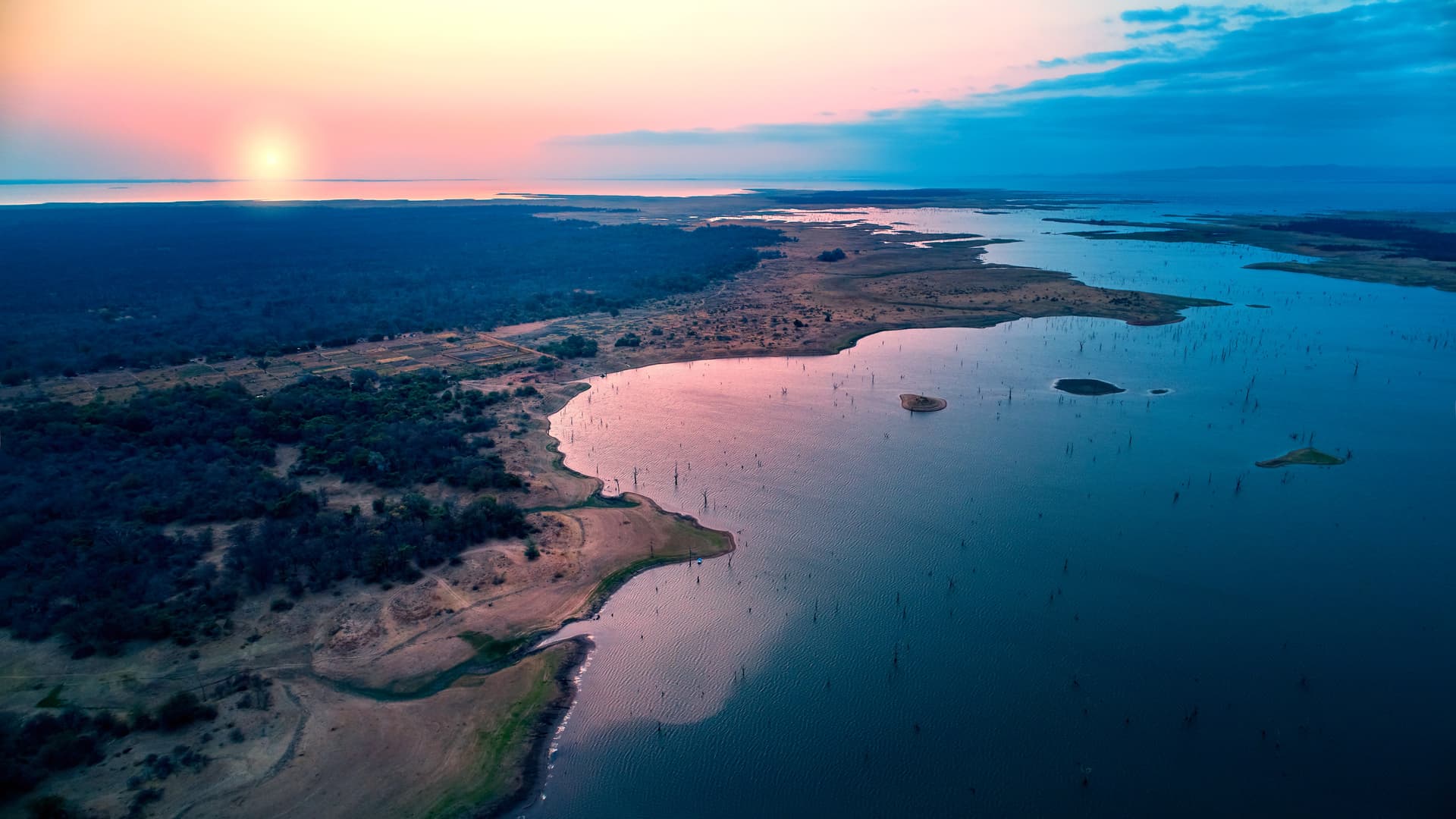
Lake Kariba stretches nearly 220 kilometres along the border with Zimbabwe. Built between 1955 and 1959 on the Zambezi, it submerged the Batonga valley, whose villages were relocated to higher ground around Sinazongwe and Siavonga. That history remains vivid: Tonga communities still live from fishing kapenta, a small dried fish seen in silvery sheets on the drying racks along the shores. On the Zambian side, hundreds of dead mopane trees that emerged when the lake filled still rise from the water, forming those characteristic grey silhouettes that cut through sunsets. The banks host elephants, buffalo and hippopotamuses, particularly visible in the dry season when water becomes scarce inland.
Sinazongwe is our preferred gateway. The village lives from its fishing port and a few lodges perched on rocky promontories. This is where the houseboats depart—six to twelve-cabin barges that drift toward Chete inlets or upstream towards islands. Tigerfish angling, pursued by enthusiasts drawn to this spirited, sharp-toothed species, peaks from September to December. On the Siavonga side, closer to Lusaka by road, the atmosphere differs: it's a weekend retreat for capital residents, more animated.
Kafue, to the west, operates at an entirely different scale. At 22,400 km², it's Zambia's largest park and one of Africa's vastest, yet visitor numbers remain remarkably low—in certain sectors, our guides encounter fewer than five other vehicles daily even in peak season. The park divides into three distinct zones. The south, around Lake Itezhi-Tezhi, blends miombo woodland with grasslands, terrain of leopards and vast buffalo herds. The centre follows the Kafue River course, which names the park, with dense riverine vegetation. The north is dominated by the Busanga plains, a 750 km² seasonal flood zone revealed from August to October: here concentrate herds of puku, endemic red lechwe, and tree-climbing lions that haul themselves into fig trees to escape heat and insects.
Ila and Nkoya communities occupy the park's edges and supply many guides and trackers. Their knowledge of seasonal plains, Kafue's inundation cycles and wildlife behaviour structures the walking safaris offered by bush camps. Local cuisine centres on nshima, maize paste served with dried lake fish or delele leaves, plus wild mushrooms ichikolowa harvested during rains.
This region appeals to travellers who've already experienced a classic safari and seek something more discreet, or those wanting to blend a water-based Kariba experience with pure bush at Kafue. Distances are real and infrastructure remains artisanal—precisely what defines the place's character.
To discover
Houseboat on Lake Kariba. Three to four nights on a barge from Sinazongwe, drifting slowly among mopane trees emerging from the water, tigerfish angling and watching elephants descend at dusk to drink.
Busanga plains in the dry season. From August to October, the seasonal floodplains in northern Kafue reveal themselves. Herds of red lechwe by the hundreds and lions climbing into sycamore figs to escape the heat.
Tonga villages of Sinazongwe. Encounter kapenta fishers on the lake's northern shore, fish drying on racks and stories of communities displaced during the 1958 lake filling.
Walking safari in southern Kafue. Three to four-hour walks from camps around the Nanzhila River, Ila trackers reading leopard tracks in sand and passages near termite mounds inhabited by mongooses.
Lake Itezhi-Tezhi at sunset. Dam built in 1977 at Kafue's southern boundary, shallow waters dotted with dead trees, substantial hippopotamus population and slanting light on the Konkwe hills.
When to go
The dry season, May to October, structures visits to both zones. At Kafue, the Busanga plains are only accessible from late July or early August, once flood waters recede: before then, most northern camps are closed. September and October deliver peak wildlife concentrations around water sources, with days reaching 32–35°C and nights still cool at 12–14°C in June–July. On Lake Kariba, tigerfish angling is optimal from October to December, when water warms.
The rainy season, November to March, transforms Kafue: 800 to 1000 mm falls across these five months make northern tracks impassable and most bush camps close between December and April. The south remains accessible in green season with exceptionally beautiful light and abundant birdlife. On Kariba, rains are less intense but afternoon storms can complicate navigation. October is the hottest month, with peaks reaching 40°C on the lake shores—a factor to weigh for heat-sensitive travellers.
Practical advice
We recommend a minimum of 6 to 7 nights to combine both zones: 3 nights on Kariba, ideally by houseboat from Sinazongwe, then 4 nights at Kafue split between a southern camp and a Busanga camp. Access is from Lusaka, roughly 4 hours by road to Siavonga or 6 hours to Sinazongwe. For Kafue, the road to the park's south takes 5 to 6 hours, but Busanga in the north is reached by charter flight in 1.5 hours from Lusaka—strongly advised given distances within the park.
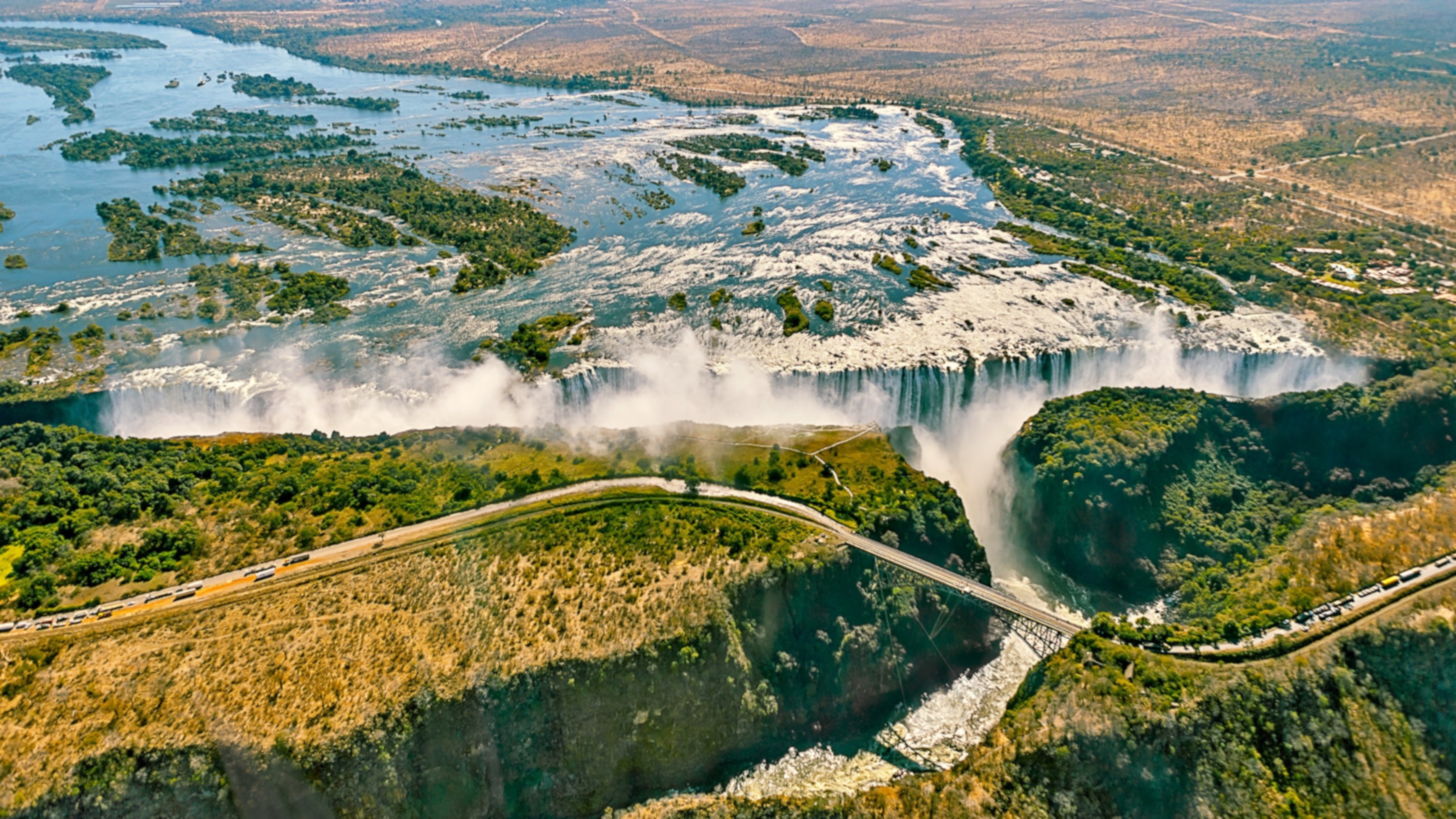
The most coherent combination pairs Kariba–Kafue with Livingstone and Victoria Falls to the south, accessible by flight from Kafue. Travellers seeking stark contrast continue to South Luangwa for a different safari style, richer in predators. Liuwa Plain at the far west combines well with Kafue for those drawn to remote zones. Comfort in our Kafue camps ranges from simple tented camps to higher-standard lodges at Busanga, but none reaches the polished luxury of major African destinations: this is a region for safari-seasoned travellers, photographers, naturalists, or contemplatives who accept remoteness and logistical surprises in exchange for pristine wildlife and very few other vehicles.