Liuwa Plain and Zambia's Wild West
Flat grasslands on the Angolan border, Africa's second-largest wildebeest migration in November, just three camps and access by charter flight or expedition 4x4.
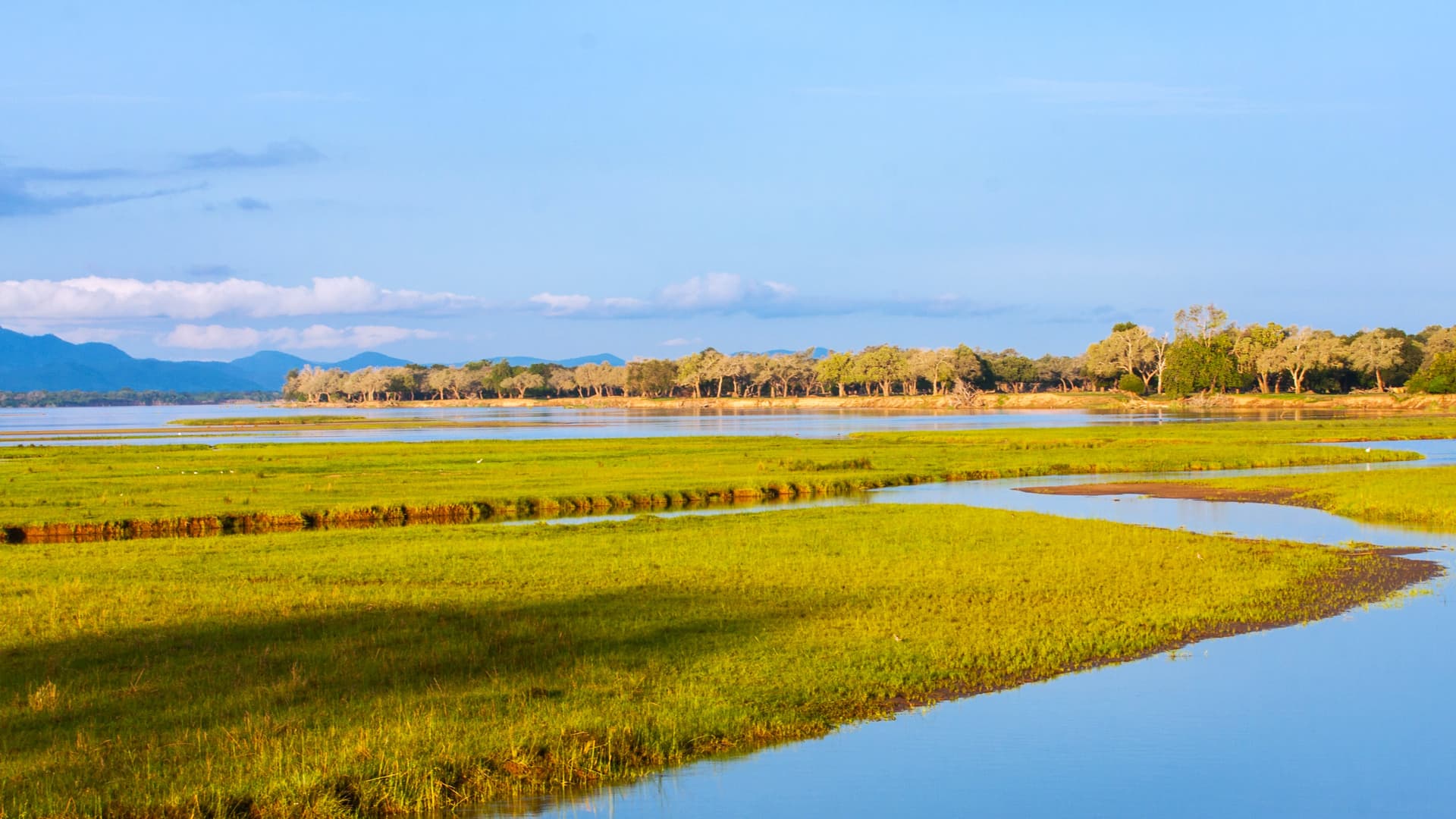
Liuwa Plain stretches across Western Province at the far west of Zambia, just tens of kilometres from the Angolan border. It is a plain of short grass and seasonal floodplains covering nearly 3,660 km², punctuated by isolated stands of trees and seasonal waterholes. The park resembles no other protected area in the country: no hills, no major permanent river cutting through its heart, just a flat horizon that forces the eye to recalibrate. For our team based in Lusaka, it is the logistically most demanding destination, and one that attracts the most motivated traveller.
The region is inhabited and jointly managed by African Parks and the Barotse Royal Establishment, the traditional authority of the Lozi people. This co-management is rare in southern Africa and shapes local life. Lozi villages border the access tracks near Kalabo, the park's northern entry point. Each year, in March or April as waters from the Zambezi rise, the Kuomboka ceremony sees the Litunga, king of the Lozi, leave his flooded residence at Lealui for Limulunga on higher ground, aboard the royal canoe Nalikwanda. This is a court relocation, not a spectacle staged for travellers, and it marks the rhythm of the entire lower Zambezi plain.
Liuwa is home to Africa's second-largest blue wildebeest migration, after the Serengeti. Between late October and December, around 30,000 wildebeest converge on the central plains as the first rains bring fresh grass. They are accompanied by zebras, tsessebe and elands. The park is also known for its particularly numerous spotted hyena clans: here, it is they, not lions, that dominate the predator chain. Lions were reintroduced from 2009 onwards, following the story of Lady Liuwa, the last surviving lioness who lived alone for years. The population is slowly rebuilding, with around a dozen individuals today.
The birdlife alone justifies the journey for many of our clients: wattled cranes in large numbers, white pelicans, abdim's storks, stilts, and more than 330 species recorded across the flooded plains. From December to March, when water covers much of the park, Liuwa becomes a major wetland zone. This same water renders the tracks impassable and closes the park to vehicle access, hence the limited access window.
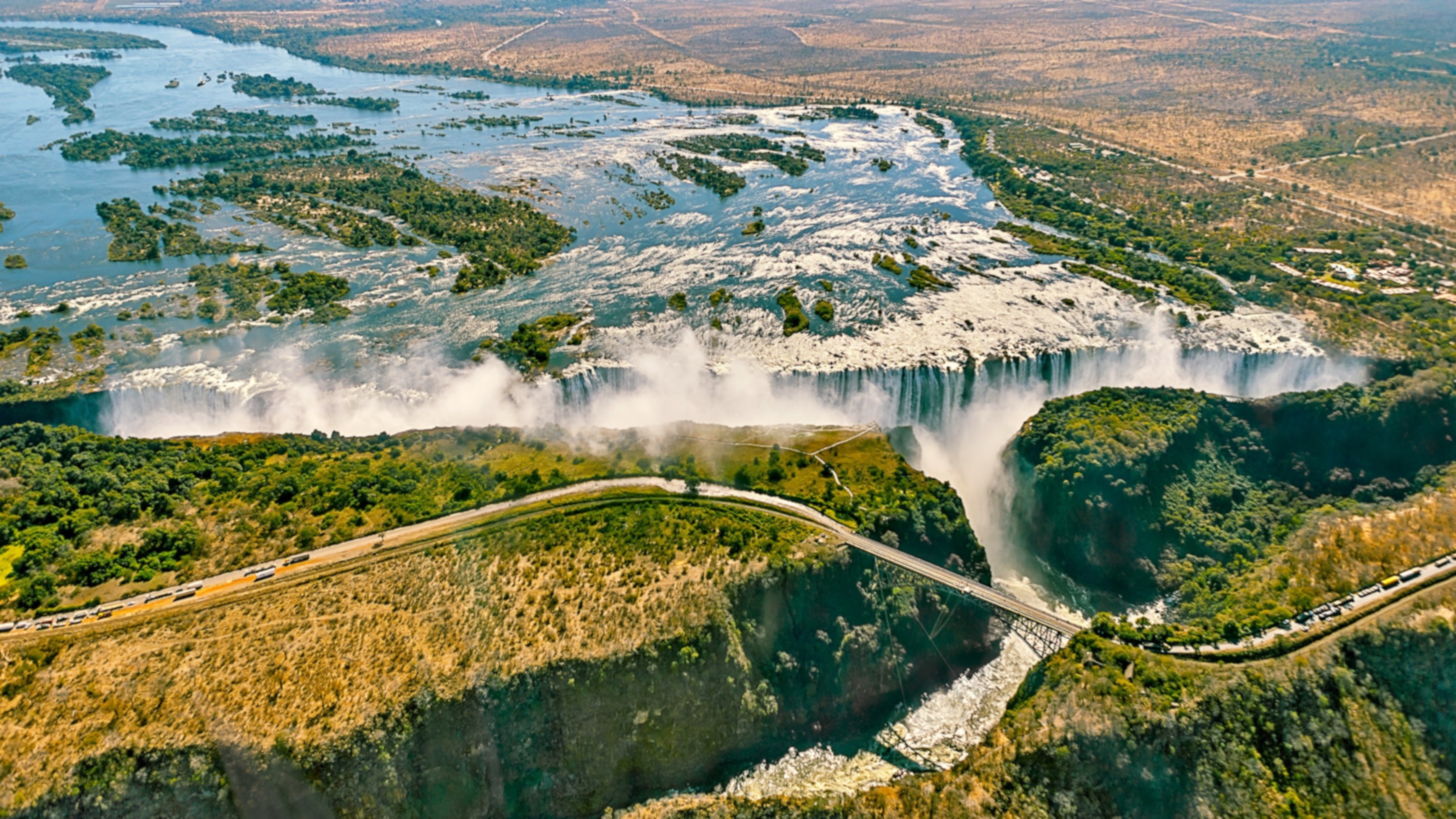
Some 250 km south of Mongu, on the Zambezi, Ngonye Falls complete the region. They do not plunge from a single drop like Victoria, but spread in a semicircle over nearly 1.8 km, in a basaltic setting still rarely visited. A community-run camp at Sioma village allows you to spend a night there, en route to or from Liuwa. More broadly, Barotseland remains an agricultural and riverine Zambia: net fishing on Zambezi channels, cassava, sorghum, extensive cattle ranching, and weekly markets in Mongu where dried fish and Kaoma rice circulate in abundance.
Only three camps operate inside or on the edge of the park: King Lewanika (luxury, managed by Time + Tide), Matamanene (seasonal research camp open to travellers) and Sikale community camp, more rustic. This scarcity keeps tourism at very low intensity, which is exactly the contract we offer to travellers who choose Liuwa: few vehicles, plenty of silence, and the certainty of meeting almost no one.
Must-see
Wildebeest migration in November. Herds converge on the central plains between late October and December, followed by hyenas in clans of fifteen to twenty individuals. Clear views over kilometres, with no visual obstruction.
Ngonye Falls on the Zambezi. A basaltic arc 1.8 km wide, 250 km south of Mongu. Swimming possible in the pools during the dry season, overnight at Sioma community camp.
Kuomboka ceremony of the Lozi people. The royal relocation by Nalikwanda canoe between Lealui and Limulunga, in March or April according to the flood. A customary event, not a spectacle, with the date announced a few weeks in advance.
Hyena clans and Lady Liuwa the lioness. Liuwa is one of the few African parks where spotted hyenas occupy the top of the food chain. The story of the solitary lioness reintroduced from 2009 has marked the park's management.
Wattled cranes on the flooded plains. One of the highest concentrations in southern Africa for this endangered species, observable from November to April on the central wetlands.
When to go
The useful window at Liuwa is narrow. The dry season begins in May and the park officially reopens to vehicles around late May or early June, when the tracks become passable again. Between June and August, the climate is dry and cool, nights around 8 to 12°C, days between 22 and 26°C, few animals concentrated but clear light and easy access. September and October mark rising temperatures, up to 35°C during the day, grass is short and rare water points attract wildlife. The densest period remains November to mid-December: the first rains trigger the arrival of wildebeest and an explosion of migratory birdlife, with brief storms in late afternoon.
From mid-December to end of April, rainfall totals 600 to 900 mm, the plains flood and virtually the entire park becomes inaccessible by 4x4. Only charter flights from Lusaka or Kafue allow you to reach King Lewanika during this period, and the experience becomes primarily aerial and aquatic, focused on birds. We advise against January and February for inexperienced travellers: logistics are unpredictable and movement is limited.
Practical advice
Allow a minimum of 4 nights on site to justify the effort of getting there. Arrival is by charter flight from Lusaka, approximately 2.5 hours, or by expedition 4x4 from Mongu, the provincial capital connected to Lusaka by the M9 bitumen road (610 km, a full day), then ferry across the Zambezi at Kalabo and sandy tracks to the camps. The overland option only makes sense for travellers who also want to see Ngonye Falls and cross Barotseland, meaning a circuit of 8 to 10 days total.
Liuwa combines well with Kafue (direct flight between the two parks) for safari enthusiasts seeking low tourism density, or with Livingstone and Victoria Falls at the end of your trip to balance ruggedness with comfort. Combination with South Luangwa is possible but requires returning to Lusaka. The comfort level at King Lewanika is high, that of Matamanene is simpler and observation-focused. This region suits contemplative travellers, landscape photographers, birdwatchers, and those who have already done one or two classic safaris elsewhere and seek a less crowded experience. It is less suitable for families with young children, due to transfer times and the absence of nearby medical infrastructure.