Lusaka and the Central Plateau
Capital at 1,280 metres and aviation hub to all Zambian parks, Lusaka reveals itself through its markets, artisan workshops and central plateau reserves.
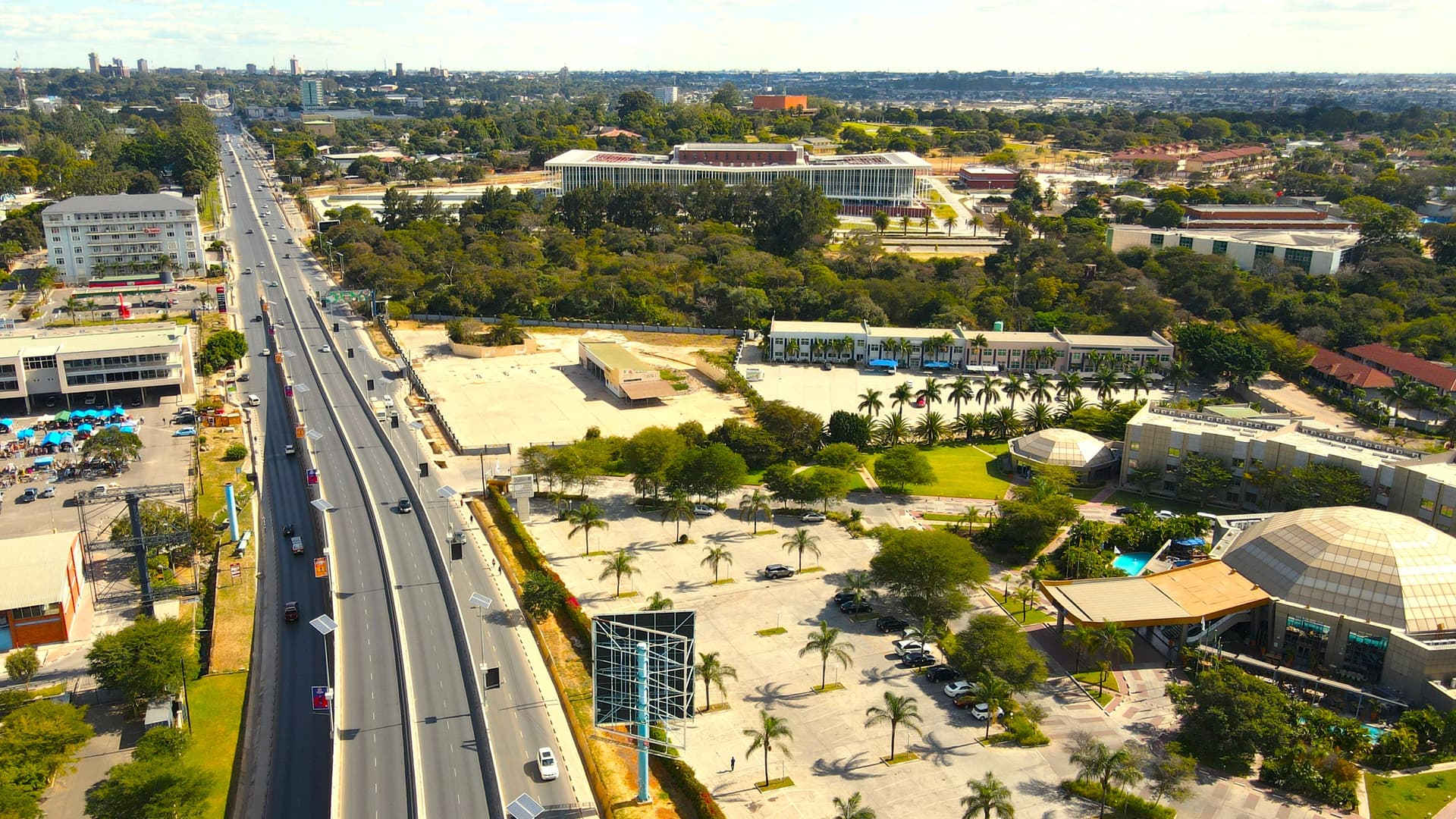
Lusaka is our base. Our team lives and works here, and this city is the gateway for nearly all the journeys we organize in Zambia. Positioned at 1,280 metres altitude on the central plateau, the capital is home to close to three million inhabitants and sprawls horizontally with no dramatic relief, traversed by the major arteries of Great East Road and Great North Road that structure traffic flow. The altitude tempers the climate: temperatures rarely exceed 30°C in the warm season, June and July nights drop to around 8-10°C, and the air remains dry for much of the year.
Lusaka is not a city of monuments. It reveals itself through its quarters and markets. Soweto Market, in the centre-west, concentrates popular commercial activity: stalls of chitenge (the printed fabrics worn by women), dried fish from Lake Tanganyika, plateau vegetables, metalwork. Kabwata Cultural Village, to the south, brings together around forty artisan workshops (wood carving, basketry, batik) where you buy directly from the craftspeople. To understand the country's recent history, the Lusaka National Museum traces southern African independence movements and the role played by Kenneth Kaunda, the first president, whose house-museum can be visited in Chilenje.
On the dining front, Zambian cuisine revolves around nshima, a thick paste of white maize that you scoop by hand to accompany a relish: sweet potato leaves (kalembula), beans, beef in sauce, or kapenta, these small dried fish from Lake Tanganyika that are sautéed with tomatoes and onions. A few establishments like Mukwa House or Lilayi Lodge offer a refined version of this cuisine, alongside a fairly rich international scene (Indian, Lebanese, South African) that reflects the diversity of the capital.
Around Lusaka, the central plateau unfolds as wooded savanna at 1,000-1,300 metres, dotted with commercial farms (maize, tobacco, soya) and a few private reserves. Lilayi Estate, 30 minutes south of the centre, houses an elephant orphanage managed by Game Rangers International: you can observe the feeding of elephant calves recovered from the northern parks before their reintroduction to Kafue. Further north, Chaminuka Nature Reserve offers an introduction to wildlife on a closed 10,000-hectare estate, useful on the first or last day of a stay. To the east, the Lower Zambezi Escarpment and the descent towards the Zambezi valley begin two hours' drive away.
Lusaka plays above all an aviation hub role. Kenneth Kaunda International Airport, 25 kilometres north-east, concentrates domestic flights to Mfuwe (gateway to South Luangwa), Royal Airstrip (Lower Zambezi), Livingstone, Kasaba Bay and the Kafue airstrips. Proflight and Mahogany Air operate these connections in small aircraft, usually in the morning. This logistics framework conditions almost all itineraries: you arrive in Lusaka, sleep one night, then shift the next day towards the bush.
The traveller who stops two days in Lusaka will not seek a dramatic landscape moment but rather an entry point: understanding the urban fabric of a country that is 65% rural, encountering a discreet artistic scene (gallery 37d, the Alliance française), grasping the rhythm of a southern African capital far from the intensity of Johannesburg or Nairobi.
To Discover
Soweto Market and Kabwata Cultural Village. The main popular market for chitenge and dried kapenta, then the artisan workshops of Kabwata where sculptors and basket weavers work in the open air. Two distinct atmospheres, half a day.
Lilayi Elephant Orphanage. 30 minutes from the centre, the public feeding at 11:30 allows you to observe elephant calves recovered from Kafue and Luangwa, before their gradual reintroduction to the wild.
Kenneth Kaunda House-Museum. The modest Chilenje home where the first president lived before independence in 1964. An hour to grasp the country's recent political history.
Zambian Cuisine in Daily Life. Taste nshima accompanied by kalembula and kapenta at an establishment like Mukwa House, or a lunch at a local's home that we arrange on request in the Chawama township.
Chaminuka Nature Reserve. Private 10,000-hectare estate 45 minutes to the north, useful for a first approach to wildlife (giraffes, zebras, antelopes) if the bush programme starts late.
When to Go
Lusaka benefits from a climate moderated by altitude, more pleasant than the Zambezi or Luangwa valleys. The dry season runs from May to October: days of 22-27°C, clear skies, cool nights in June-July (8-12°C, bring a fleece). October marks the heat peak before the rains, with afternoons around 30-33°C and a dusty atmosphere. The rainy season sets in from late November to March: short thunderstorms in late afternoon, which don't prevent urban activities but quickly saturate the plateau tracks. January and February concentrate the heaviest precipitation (200-250 mm per month).
For a stopover of 1-2 days, the season matters little: Lusaka remains accessible year-round and the climate is rarely constraining. The real seasonal question concerns the parks toward which the city serves as a springboard.
Practical Advice
We recommend incorporating Lusaka as a technical stopover of 1-2 nights, on arrival and sometimes on departure, rather than as a destination in itself. One night is enough if your domestic flight leaves early the next morning. Two nights allow you to add a half-day of discovery (markets, Kabwata, Lilayi) without frustration. Kenneth Kaunda International Airport (LUN) is served from Addis Ababa, Nairobi, Johannesburg, Dubai and Istanbul, with connections to Europe.
The region combines with all other Zambian destinations via Proflight flights: allow 1 hour 15 minutes to Mfuwe (South Luangwa), 30 minutes to Royal Airstrip (Lower Zambezi), 1 hour 30 minutes to Livingstone. Lower Zambezi is also accessible in 3 hours by road via Chirundu, a useful option for travellers who prefer to avoid small aircraft. Hotel comfort in Lusaka is adequate without being exceptional: we work with a few lodges on the periphery (Lilayi Lodge, Pioneer Camp, Latitude 15) that offer gardens and tranquillity, rather than with the large chains in the centre. This stopover suits all traveller profiles, with no particular logistical difficulty.