Lower Zambezi National Park
Alluvial plains, riverine forests and the Zambezi River: Lower Zambezi National Park concentrates exceptional wildlife in one of Zambia's least-visited parks.
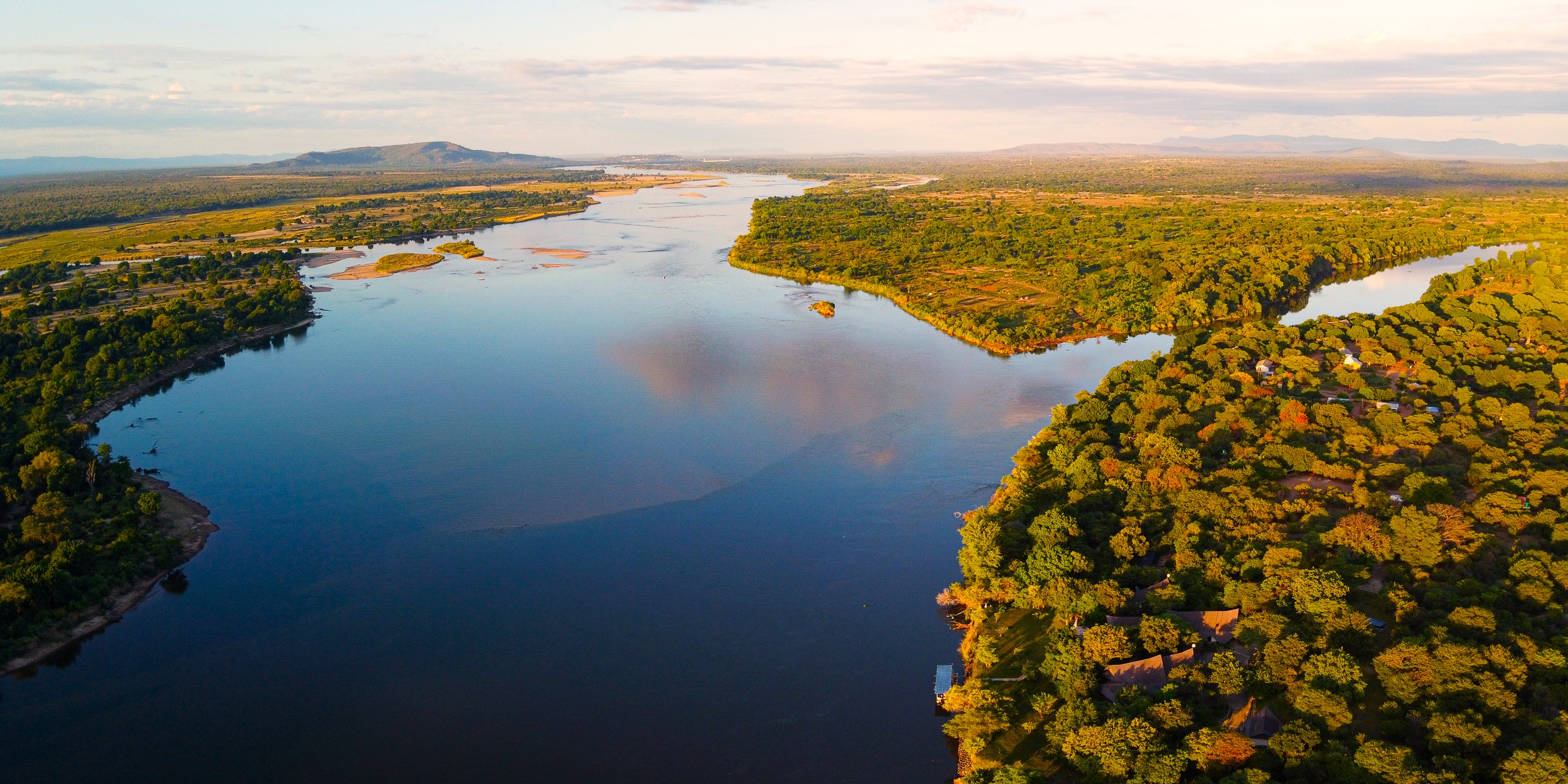
Lower Zambezi National Park stretches along the northern bank of the Zambezi River, facing Zimbabwe's Mana Pools National Park. Ranked among Zambia's least-visited parks, it offers dense wildlife—elephants, buffalo, lions, leopards, hippopotamuses—set within alluvial plains and riverine forests. The river's proximity structures all wildlife and visiting activities.
Practical information at a glance
- Entry: paid (daily permit required, managed by ZAWA — Zambia Wildlife Authority)
- Access: track from Chirundu (approximately 100 km) or charter flight from Lusaka to park airstrips
- Best season: dry season from May to October — roads passable, wildlife concentrated near the river
- Recommended duration: minimum 2 to 4 nights to enjoy morning and evening safaris
- Dress code: neutral colors (khaki, beige, olive green) recommended for safaris
- Accessibility: very limited — unprepared tracks, natural terrain
What to see
The park is home to the Big Five (lion, leopard, elephant, buffalo, rhinoceros—the latter very rare here). Elephants are particularly numerous and often spotted crossing the Zambezi. Hippopotamuses and crocodiles occupy the banks year-round. Birdlife is exceptional: African fish eagle, giant kingfisher, Goliath heron.
History and context
The park was established in 1983. It covers approximately 4,092 km². Long difficult to access, it remained underdeveloped for tourism, which has preserved its wild character. The lower Zambezi valley has been inhabited for millennia; the Goba and Soli peoples lived in this region before the park's creation.
Highlights of a visit
Canoeing safari on the Zambezi
Paddling downriver between sandbanks and islands is the park's signature experience. You approach hippopotamuses and elephants within metres, at water level. Camps offer guided outings led by armed guides.
Game drive by 4×4
Tracks run along the river and cross fig and acacia forests. Dawn departures are most productive: lions often visible early morning, elephants moving toward the river.
Tiger fish angling
The Zambezi is renowned for tigerfish (Hydrocynus vittatus), a combative species prized by sport anglers. Fishing season coincides with the dry season. Camps organise outings with equipment.
Guided bush walk
Walking safaris allow you to read tracks, observe insects and vegetation at eye level. Activity reserved for visitors in good physical condition, always led by a certified armed guide.
Photography tips
Golden light during the first two hours after sunrise is ideal for photographing wildlife on the banks. By canoe, a 200-400 mm lens allows framing without disturbing animals. Protect your gear from river moisture with waterproof covers. Zambezi reflections at sunset offer remarkable natural backdrops.
Location and access
The park is located in Lusaka Province, east of Chirundu. The road from Lusaka to the park entrance is partly tarred then unpaved—a 4×4 vehicle is essential during the rainy season. Charter flights operate from Lusaka to interior airstrips (Royal Airstrip, Jeki Airstrip). Across on the Zimbabwean bank lies Mana Pools National Park.
Nearby attractions
- Chirundu — busy border post between Zambia and Zimbabwe, logistical starting point for the park.
- Kafue National Park — one of Africa's largest parks, to the west, accessible from Lusaka.
- Lusaka — Zambian capital, main air hub for reaching Lower Zambezi by charter.
Frequently asked questions
The dry season, May to October, is optimal. Roads are passable, vegetation less dense, and wildlife concentrates near the river. July-September offers the best viewing conditions.
Self-drive game drives are technically possible with a ZAWA permit, but walking safaris and canoe safaris require a certified armed guide. Most visitors stay at camps that include guided activities.
Two options: 4×4 drive via Chirundu (approximately 4 to 5 hours depending on track conditions) or charter flight from Lusaka to park airstrips in 30-40 minutes.
Vehicle game drives suit children. Walking safaris and canoeing are generally reserved for adults or children above a certain age—check with your camp before booking.
The two parks face each other across the Zambezi, but official border crossing is via Chirundu. A combination is possible by arranging Zimbabwean visas in advance. Some operators offer combined itineraries.
Favour neutral colours (khaki, beige, olive green). Avoid white and bright colours which can disturb animals. Pack lightweight clothes for daytime and a warm layer for dawn outings, which are cool in the dry season.
Interested in this visit?
We can include it in your personalised itinerary.