South Luangwa National Park
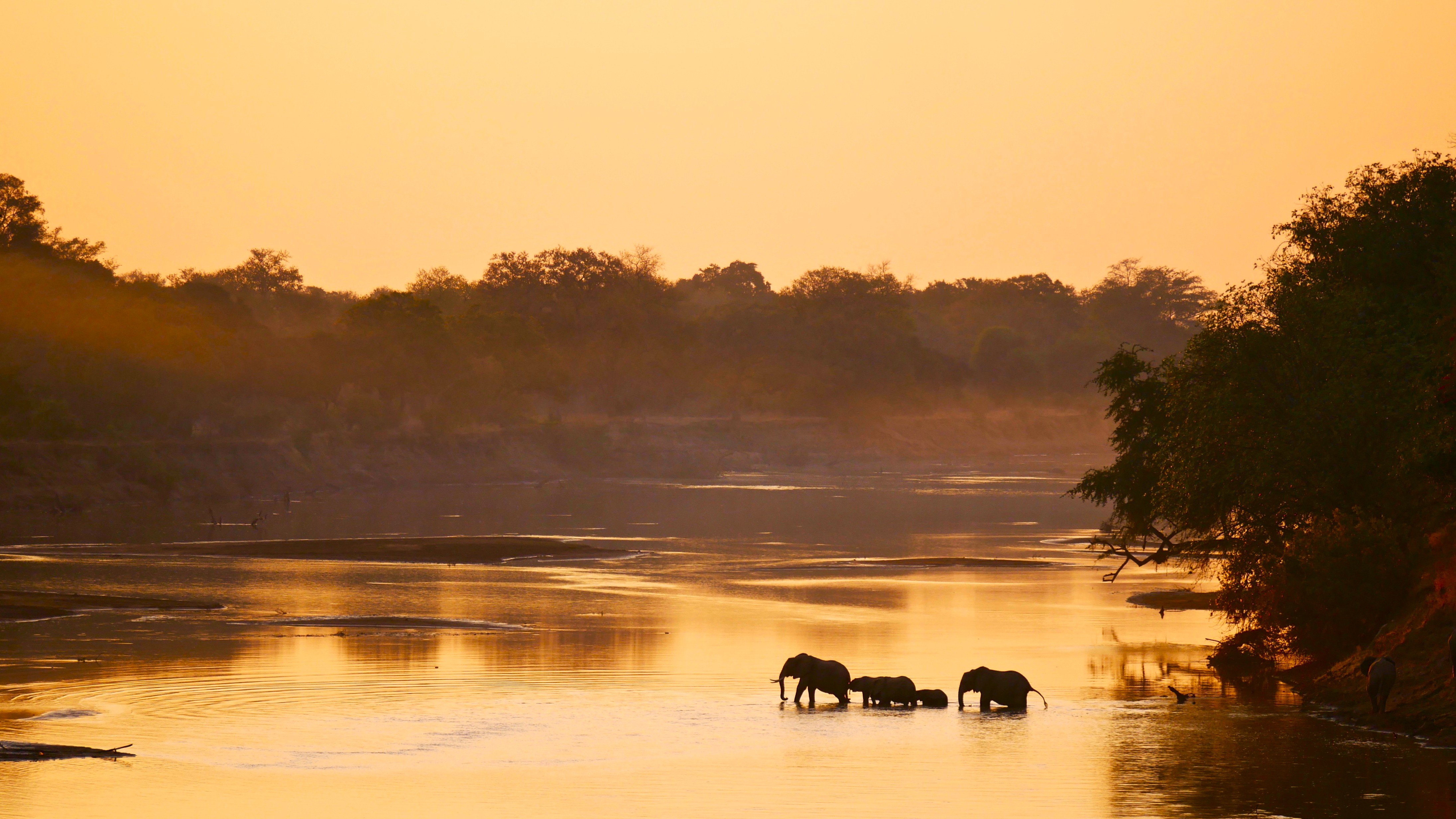
South Luangwa National Park, the cradle of walking safari, concentrates exceptional wildlife along the Luangwa River: leopards, elephants, hippos and Thornicroft's giraffe, endemic to the valley.
South Luangwa National Park spans approximately 9,000 km² across the Luangwa Valley in eastern Zambia. Centered on the Luangwa River and its tributaries, it is home to one of southern Africa's highest concentrations of wildlife. The park is renowned for inventing the walking safari, a practice that remains a singular experience here. Leopards, elephants, buffalo, hippos and over 400 bird species populate its plains and ebony forests.
Key practical information
- Entry: Fee-based (daily entrance fees set by DNPW — verify current rates with your operator or the DNPW)
- Access: Mfuwe Airport (MFU), served from Lusaka and Lilongwe; negotiable dirt track by 4×4 from Chipata
- Best season: Dry season from May to October — low vegetation, wildlife concentrated near water sources
- Recommended duration: 3 to 5 nights minimum to cover multiple zones and safari types
- Clothing: Neutral colors (khaki, green, beige) for safaris; avoid white and bright blue
- Accessibility: Limited — uneven terrain; some lodges offer adapted vehicles, confirm at booking
What you'll see
The Luangwa River structures all wildlife activity in the park. Its banks concentrate hundreds of hippos and Nile crocodiles. Floodplains host large herds of buffalo and impalas. South Luangwa is one of the world's finest places to observe leopards, particularly during night safaris. The park is also home to the puku, an antilope endemic to the Luangwa Valley, and Thornicroft's giraffe, a subspecies found nowhere else.
History and context
The Luangwa Valley has been inhabited for millennia by Kunda communities. The park is officially established in 1972, though protection of the area dates back to the 1930s. Norman Carr, a British guide and conservationist, developed the walking safari here in the 1950s — a revolution in wildlife encounter. South Luangwa remains today a model of community-based conservation, with programs linking riverine villages to tourism revenue.
Highlights of a visit
Walking safari
Invented here, the walking safari allows you to approach the bush on foot, guided by an armed ranger and a tracker. You read spoor, observe insects, approach herbivores within tens of meters. A sensory experience that a vehicle cannot provide.
Night game drive
Permitted in South Luangwa, night drives are rare in African parks. The spotlight beam reveals hunting leopards, civets, genets and owls. It's the best window for observing large cats in action.
Wildlife concentration in the dry season
From July to October, the Luangwa River recedes. Animals converge on remaining water sources. The riverbanks become scenes of spectacular congregation: elephant herds, clashing hippos, buffalo crossings.
Birdwatching
With over 400 species recorded, the park is a premier birdwatching destination. The rainy season (November-April) attracts Palearctic migrants and sees chicks fledge among numerous resident species.
Photography tips
Golden light in the first hours after sunrise and late afternoon is ideal. Morning safaris (departing before dawn) offer the best conditions. In the dry season, dust can haze midday images — protect your gear. Night safaris require a fast lens (f/2.8 or wider) and high ISO sensitivity. Photography is permitted; avoid unwelcome flashes that disturb animals.
Location and access
The park lies in the Eastern Province, approximately 70 km south of Chipata. The main entrance is the village of Mfuwe, accessible via Mfuwe International Airport (MFU). Regular flights connect Mfuwe to Lusaka; seasonal services run from Lilongwe (Malawi). From Chipata, a dirt road reaches Mfuwe — a 4×4 is essential, especially during the rainy season. Lodges typically arrange transfers from the airport.
Nearby
- North Luangwa National Park — wild and little-visited park to the north, accessible only on foot or by fly-camp, for experienced travelers.
- Chipata — main staging town before the park, with local markets and basic services.
- Luambe National Park — small park nestled in the Luangwa Valley, virtually untouched by mass tourism.
Frequently asked questions
The dry season, from May to October, is optimal: low vegetation, wildlife concentrated near water, roads passable. July-October offers the highest wildlife concentrations. The rainy season (November-April) is lush and rich in birds, but some areas become inaccessible.
It is led by professional armed rangers and experienced trackers. Risk exists as in any African bush, but incidents are rare. Follow your guide's instructions strictly: never run, stay grouped, avoid sudden movements.
Opt for neutral colors: khaki, beige, olive green, gray. Avoid white, bright blue and loud patterns that attract insects and disturb animals. Pack long sleeves for morning and night safaris, when temperatures can be cool.
Yes. A classic itinerary pairs South Luangwa with Victoria Falls (Livingstone) and Kafue National Park. Domestic flights connect Mfuwe to Livingstone and Lusaka, avoiding long road journeys. Allow at least 10 to 14 days for such a circuit.
Most lodges and camps located inside or on the park's edge offer night game drives, often included in full-board packages. Verify this at booking, as offerings vary by property.
Most European and North American nationals must obtain a visa. It can be secured online via the Zambian official portal (eVisa) or on arrival at Mfuwe Airport. Check requirements for your passport before departure.
Interested in this visit?
We can include it in your personalised itinerary.